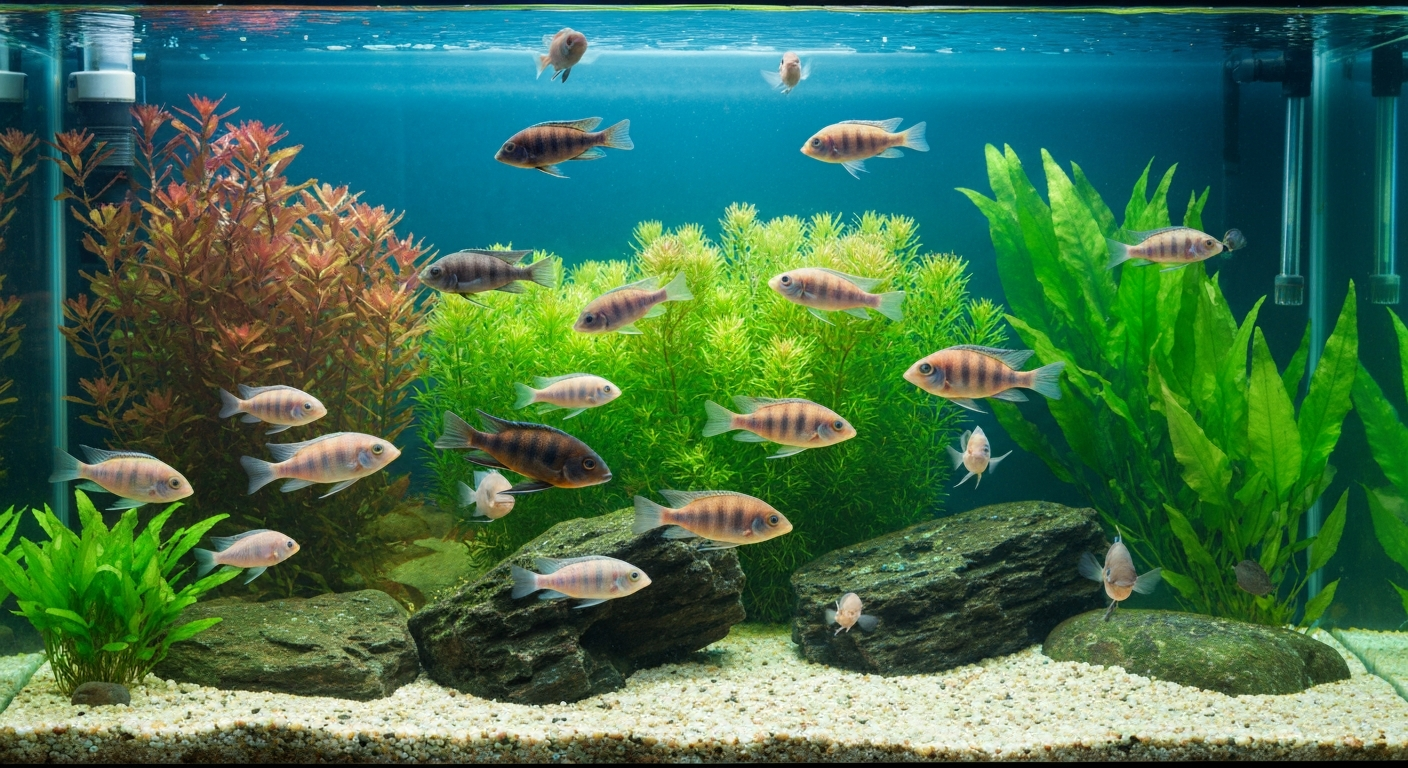
African cichlids from the Great Rift Lakes — principally Lake Malawi, Lake Tanganyika, and Lake Victoria — represent some of the most spectacular color in freshwater fishkeeping. Blues, yellows, oranges, and iridescent patterns that rival marine fish, combined with active personalities and interesting social dynamics, make African cichlid tanks endlessly fascinating.
They're also one of the best options for hobbyists in areas with hard, alkaline tap water — conditions that challenge many other species are exactly what African cichlids thrive in.
Malawi vs. Tanganyika: Key Differences
The two most commonly kept African rift lake cichlid groups have different care requirements and temperaments.
Lake Malawi Cichlids (Mbuna & Haplochromis)
- More colorful overall; wide variety of color forms
- Mbuna (rock-dwellers) are highly aggressive and territorial
- Haplochromis (open-water species) are generally larger and somewhat less aggressive
- Best kept in overcrowded tanks to spread aggression across many fish
- pH: 7.8–8.5 | Hardness: 10–20 dGH | Temperature: 76–82°F
Lake Tanganyika Cichlids
- More varied in body shape: shell-dwellers (Neolamprologus), elongated predators (Frontosa), sleek open-water fish (Cyprichromis)
- Generally more manageable aggression than Malawi mbuna
- Many species form pair bonds and can be kept in smaller groups
- Shell-dweller species (Neolamprologus multifasciatus, N. ocellatus) are fascinating nano cichlid options
- pH: 7.8–9.0 | Hardness: 10–20 dGH | Temperature: 74–80°F
Water Parameters
African rift lake cichlids require hard, alkaline water. If your tap water is naturally hard with a high pH, African cichlids may be your ideal fish — many hobbyists in the Midwest, Southwest, and South find their local water is a near-perfect match with no modification needed.
- pH: 7.8–8.5 (Malawi), 7.8–9.0 (Tanganyika)
- GH (General Hardness): 10–20 dGH
- KH (Carbonate Hardness): 10–15 dKH
- Temperature: 74–82°F depending on species
- Ammonia/Nitrite: 0 ppm
- Nitrate: Under 40 ppm (ideally under 20 ppm)
If your tap water is soft and acidic, you'll need to buffer it. Products like Seachem Malawi/Victoria Buffer, crushed coral substrate, or limestone rocks in the filter will raise and stabilize pH. Aragonite sand substrate also buffers naturally and looks excellent in African cichlid tanks.
Tank Size and Setup
A minimum 55-gallon tank is recommended for Malawi mbuna — the aggression management strategy of overcrowding requires enough fish (and therefore space) to distribute territorial behavior. A 75-gallon is better, and 125+ gallons opens up the most impressive species options.
Rockwork is essential for Malawi and most Tanganyika species. Use stacked slate, Texas holey rock, or limestone to create caves, crevices, and territory boundaries. The rock structure breaks sight lines so subordinate fish can escape the view of dominant males. Build the rock stack from the substrate up — this also prevents cichlids from digging under rocks and causing collapses.
Sand substrate (pool filter sand, aragonite, or fine play sand) is recommended. Most African cichlids are diggers, and sand is both natural and easier to maintain than gravel.
Live plants are optional and challenging — most mbuna will destroy them. Java fern and Anubias (attached to rocks, not planted in substrate) can survive. Tanganyika tanks, particularly shell-dweller setups, can be more plant-friendly.
Stocking and Aggression Management
African cichlid aggression is the most common challenge for new keepers. Several strategies work:
- Overstock deliberately (Malawi mbuna) — keeping 15–25 fish in a 75-gallon spreads aggression so no single fish is targeted relentlessly. Counterintuitive but effective.
- Keep one male per species — most interspecies aggression in Malawi is male-on-male. Multiple males of the same species almost always fight.
- Harems work well — one dominant male with 3–5 females per species reduces breeding harassment
- Rearrange décor when adding new fish — breaking up established territories when introducing new fish reduces targeted aggression on newcomers
- Avoid mixing mbuna with docile community fish — anything slow or peaceful will be harassed or killed
Feeding
Most Malawi mbuna are primarily herbivores in the wild — they scrape algae from rocks (aufwuchs feeding). Their digestive systems are not designed for high-protein meat-based foods, which can cause a condition called Malawi bloat (a fatal bacterial infection of the intestinal tract).
- Cichlid pellets with Spirulina or vegetable content — the primary daily food
- Nori / dried seaweed — excellent supplement; attach to a clip in the tank
- Avoid or strictly limit: bloodworms, beef heart, or other high-protein animal foods for mbuna
Tanganyika species and Haplochromis (non-mbuna Malawi) are more carnivorous and accept a wider protein diet, including pellets, frozen mysis, and krill.
Where to Find African Cichlids
Quality African cichlid stock — particularly rarer species and color morphs — is best found at specialty fish stores rather than big-box chains. Many LFS that specialize in African cichlids maintain breeding colonies of quality fish and can advise on compatible species combinations. Use LFS Directory to find cichlid specialists near you.