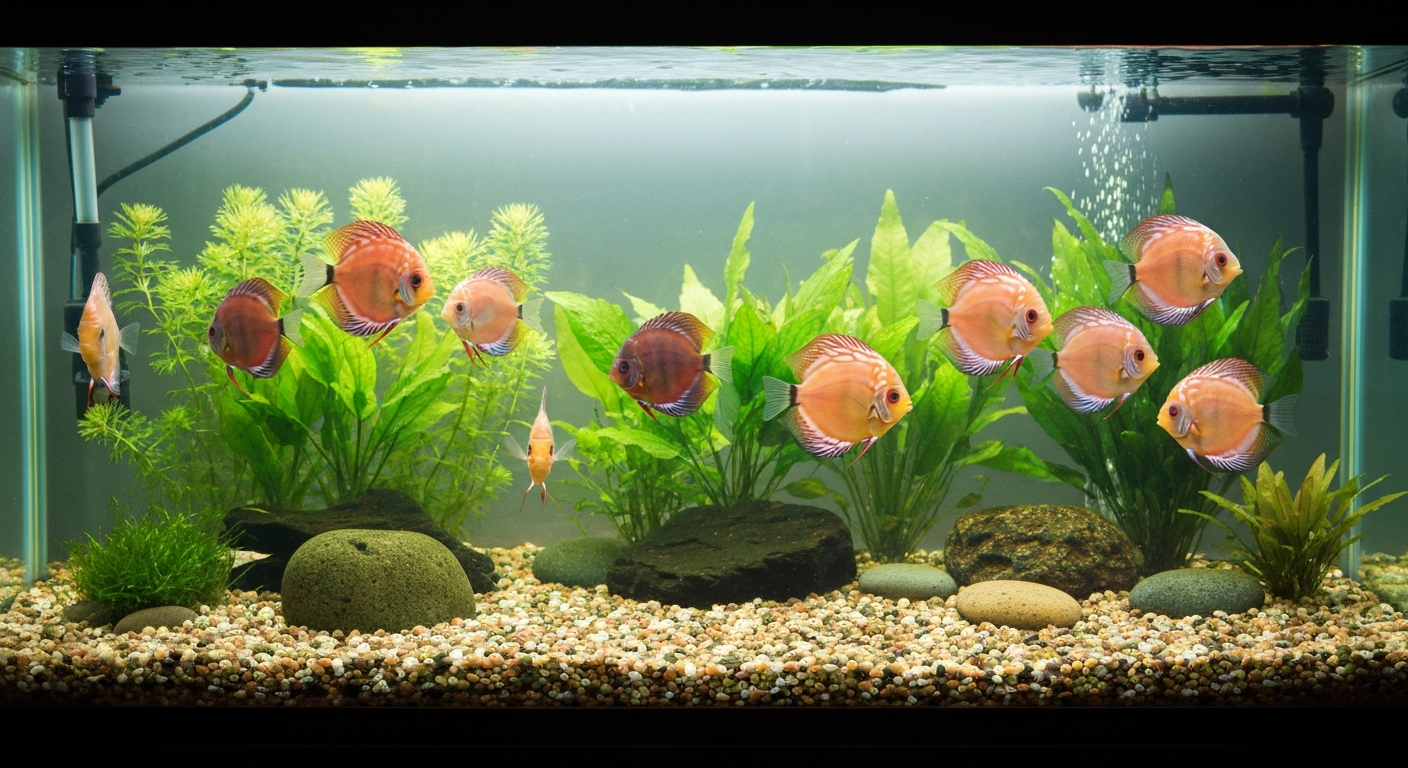
Discus fish have held a special place in the freshwater hobby for decades. Their disc-shaped bodies, vivid coloration, and stately presence in a well-planted aquarium make them one of the most visually impressive freshwater fish available. They're also among the most demanding species you can keep — earning their reputation as the "king of the aquarium."
This guide is honest about what discus require. They are not beginner fish. But for hobbyists ready to meet their needs, they are extraordinarily rewarding.
Discus Quick Facts
- Scientific name: Symphysodon spp. (S. aequifasciatus, S. discus, S. tarzoo)
- Origin: Amazon River basin, South America
- Adult size: 6–8 inches (15–20 cm) in diameter
- Lifespan: 10–15 years in good conditions
- Temperament: Peaceful; can be shy; social within species
- Difficulty: Advanced
Water Parameters: The Most Critical Factor
More discus die from improper water conditions than from any other cause. Discus come from warm, soft, acidic blackwater tributaries of the Amazon. Replicating those conditions is non-negotiable.
- Temperature: 82–88°F (28–31°C) — higher than almost any other commonly kept freshwater fish
- pH: 5.5–7.0 (ideally 6.0–6.8)
- Hardness (GH): 1–8 dGH (soft water)
- Hardness (KH): 1–4 dKH
- Ammonia/Nitrite: 0 ppm — discus are extremely sensitive
- Nitrate: Under 10 ppm; ideally under 5 ppm
In most of the United States, tap water is too hard and often too alkaline for discus. A reverse osmosis (RO) or RO/DI system is the standard solution — you remineralize RO water to the desired parameters using a product like Seachem Discus Buffer or replenish GH/KH directly.
Cities with naturally soft water (Boston, San Francisco, Portland, Seattle) are among the best in the country for discus keeping — local hobbyists in these areas often require little or no water treatment.
Tank Size and Setup
Discus are social fish and should be kept in groups of at least 5–6. For a group of six, a 75-gallon tank is the minimum — a 90 or 125 gallon gives you more stability and display space.
Two common approaches to discus setups:
Bare Bottom Tank (Easier to Maintain)
No substrate — easy to vacuum waste, keeps nitrates low. Hospital-clean. Preferred by breeders and serious keepers. Less visually appealing but functionally superior for water quality management.
Planted Tank (More Natural)
Amazon sword plants, giant vals, and crypts tolerate discus temperatures. Driftwood naturally releases tannins that lower pH and create the dark-water aesthetic discus come from. Requires more careful balance of fertilizers and CO2 with pristine water quality, but the result is spectacular.
Water Changes
Discus require frequent, large water changes. Most successful keepers do 25–50% water changes daily or every other day. This is not optional — it is the most important maintenance task in a discus tank. Regular water changes:
- Keep nitrates near zero
- Remove dissolved organic compounds and hormones that stunt growth
- Stimulate feeding and spawning behavior
- Reduce the bacterial load that causes discus to become susceptible to disease
Always match replacement water temperature precisely to tank temperature. A cold water change on discus is a serious stressor and can trigger disease outbreaks.
Feeding
Discus are carnivores that require a high-protein diet. In the wild they eat insect larvae, small crustaceans, and organic detritus. The most successful discus diets combine:
- Beef heart mix — a DIY or commercial paste of beef heart blended with vitamins, shrimp, and other proteins. This is the traditional staple of discus breeding and the best food for growth and color development.
- High-quality discus pellets — a convenient daily option; look for pellets with fish or shrimp meal as the primary ingredient, not fillers
- Frozen bloodworms — excellent treat food; high palatability
- Frozen blackworms — highly nutritious; stimulate feeding in reluctant fish
Feed 3–5 times per day for maximum growth, removing uneaten food within a few minutes. Discus that eat irregularly or show no interest in food are usually stressed by water quality — check your parameters before assuming disease.
Compatible Tank Mates
Discus do best with peaceful, similarly-sized fish that tolerate warm, soft water. Good companions:
- Cardinal tetras (Paracheirodon axelrodi) — the classic discus companion; thrive in the same conditions
- Rummy-nose tetras
- Altum angelfish (in larger tanks)
- Corydoras sterbai — one of the few cory species that tolerates discus temperatures
- German blue rams (in established, stable tanks)
- Apistogramma species
Avoid any fish that require cooler water (most corydoras species, goldfish), aggressive species, or fin nippers like serpae tetras.
Buying Healthy Discus
Buying discus from a reputable source is critical. Avoid specimens that are:
- Showing dark coloration (a stress response in discus)
- Hiding or pressing into corners
- Showing "pepper" pattern — tiny black dots on the body, often a sign of disease or stress
- Thin body profile (side view should be round and full, not sunken)
- Not eating in the store
Always ask to see the discus eating before you purchase. A healthy discus in a quality store will come to the glass and actively feed. Use LFS Directory to find local fish stores that specialize in South American cichlids and discus — a specialty shop that keeps discus in proper conditions will have far healthier stock than a general pet store.