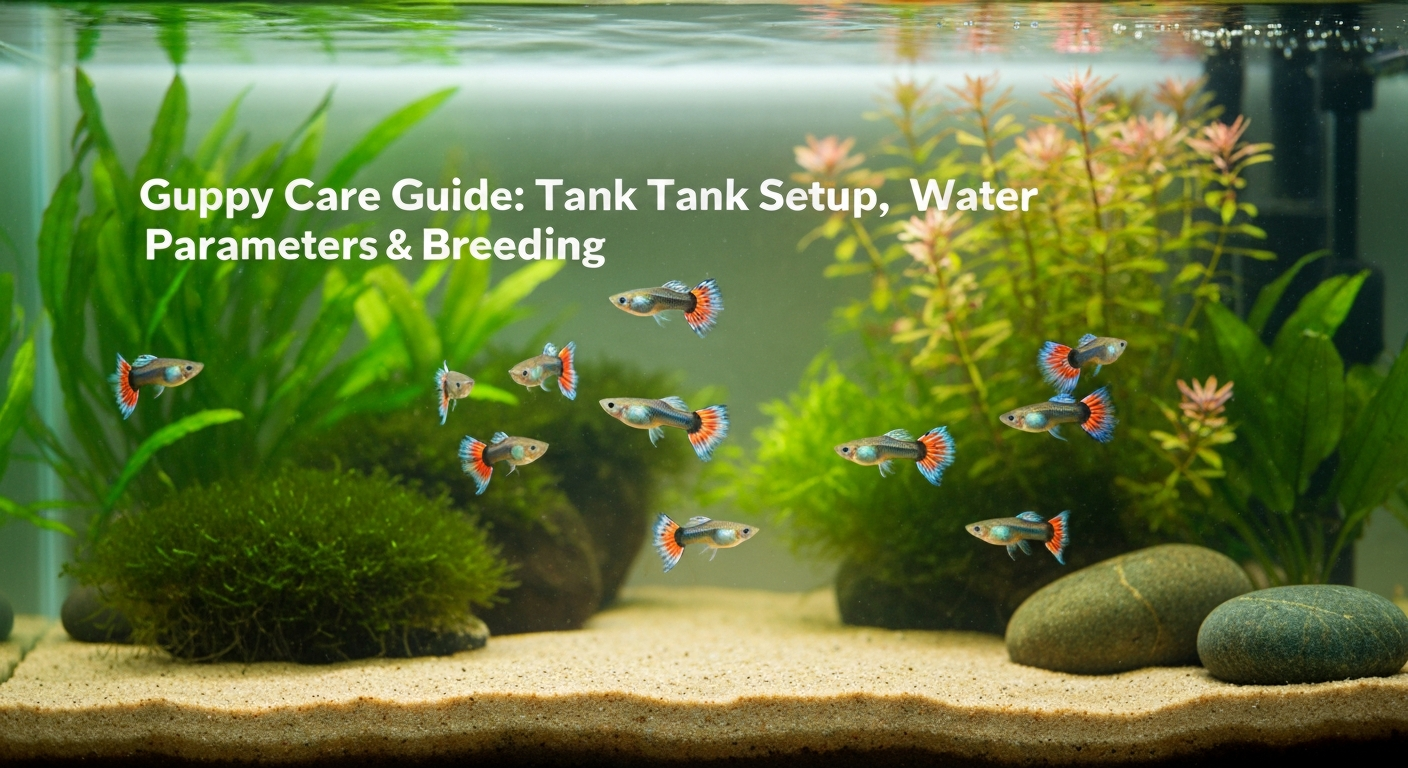
Why Guppies Are the World's Most Popular Aquarium Fish
Guppies (Poecilia reticulata) have earned their status as the beginner's fish of choice through decades of proving themselves in home aquariums around the world. They are hardy, adaptable, endlessly varied in color and fin shape, and they breed readily — giving new hobbyists the rare early experience of raising fry and watching a tank population grow naturally. But guppies are not just for beginners. Serious breeders dedicate years to developing show-quality fancy lines with elaborate tail shapes and vivid coloration, and a well-maintained colony of premium stock is as visually stunning as many reef corals. Whether you are setting up your first tank or adding a species to a mature planted setup, guppies deliver color, activity, and personality.
Tank Setup and Equipment
A 10-gallon tank is the minimum for a small guppy group, but 20 gallons provides more stable water parameters and room for a colony to develop naturally. Guppies are active swimmers and appreciate horizontal swimming space over height.
Temperature
Maintain water between 72–82°F (22–28°C). The mid-range of 76–78°F suits most strains, promotes good immune function, and balances activity level with lifespan. Higher temperatures accelerate metabolism and breeding but shorten lifespan.
Filtration
A sponge filter is the preferred choice for guppy tanks, especially any tank housing fry. Standard HOB (hang-on-back) filters create suction that can injure or kill newborn fry. Sponge filters provide gentle biological filtration with zero risk to small fish. If you use a HOB filter, cover the intake with a pre-filter sponge. Aim for gentle flow — guppies dislike strong currents.
Plants and Cover
Live plants dramatically improve a guppy tank: they provide refuges for fry, export nitrates, and reduce stress in adults. Java moss, hornwort, and water sprite are fast-growing options that establish quickly and provide dense cover. Floating plants like frogbit or duckweed give fry hiding spots near the surface, where they naturally spend time after birth.
Water Parameters
Guppies are forgiving but have a genuine sweet spot. Target these parameters for healthy, active, long-lived fish:
- pH: 7.0–7.8 (slightly alkaline preferred)
- Hardness: 8–12 dGH (moderately hard)
- Temperature: 72–82°F (76–78°F optimal)
- Ammonia / Nitrite: 0 ppm always
- Nitrate: under 20 ppm with regular water changes
Guppies evolved in warm, slightly hard, alkaline water in Trinidad and Venezuela — they genuinely prefer these conditions and are less disease-prone when kept in water that matches their natural chemistry. Avoid extremely soft or acidic water. Weekly 25–30% water changes are the single most effective tool for keeping parameters stable and fish healthy. Use a quality test kit to monitor your tank — see our water test kit guide for recommendations.
Feeding
Guppies are omnivores and thrive on a varied diet. A quality micro pellet or flake food as the daily staple, supplemented with live and frozen foods, produces the best color, growth, and breeding behavior. Good supplement options include:
- Baby brine shrimp — excellent for conditioning breeding adults and feeding growing fry
- Daphnia — acts as a natural laxative, promotes digestive health
- Micro worms or vinegar eels — ideal first foods for newborn fry
- Bloodworms — use sparingly as a treat, not a staple
Feed adults once or twice daily, only what they consume in 2–3 minutes. Overfeeding is the most common mistake in guppy tanks — uneaten food breaks down rapidly and spikes ammonia. Feed fry 3–4 small meals per day of appropriately sized foods to support fast growth during the first few weeks of life.
Breeding
Guppies are livebearers — females give birth to free-swimming fry rather than laying eggs. This is one of the main reasons they are so widely kept: breeding happens naturally with no intervention required. Understanding the basics helps you manage population size and maximize fry survival.
Gestation and Birth
Females store sperm after mating and can produce multiple batches of fry from a single mating. Gestation is approximately 28 days at optimal temperatures (shorter at higher temps, longer at lower). A pregnant female develops a visible gravid spot — a darkening near the anal fin — that expands as birth approaches. Females give birth to 20–80 fry per drop, depending on age, size, and condition. Older, larger females typically produce larger broods.
Protecting and Raising Fry
Adult guppies, including mothers, will eat fry given the opportunity. Dense planting provides some protection, but the most reliable method is a separate 5–10 gallon grow-out tank. Transfer pregnant females a day or two before their expected birth date, then move the mother back after the fry are born. Feed fry crushed flake, baby brine shrimp, or micro worms multiple times daily — frequent feeding is critical in the first two weeks.
Common Health Issues and Where to Buy Quality Guppies
Healthy guppies in good conditions are hardy, but a few issues appear regularly. Fin rot (frayed or disintegrating fins) is almost always a water quality problem — improve your maintenance routine and increase water change frequency. Ich (white spots resembling grains of salt) responds well to heat treatment: raise temperature gradually to 86°F for two weeks with increased aeration. Wasting disease caused by Camallanus worms is serious — affected fish grow thin despite eating eagerly. Treat with fenbendazole (Panacur) or levamisole per the product instructions.
For the healthiest starting stock, buy from your local fish store rather than big-box chains — LFS staff can tell you the source and quarantine history of their fish, and independent stores are far more likely to catch disease before livestock goes on sale. Make sure your tank is fully cycled before adding any fish — see our beginner freshwater tank setup guide for a complete walkthrough of the cycling process.