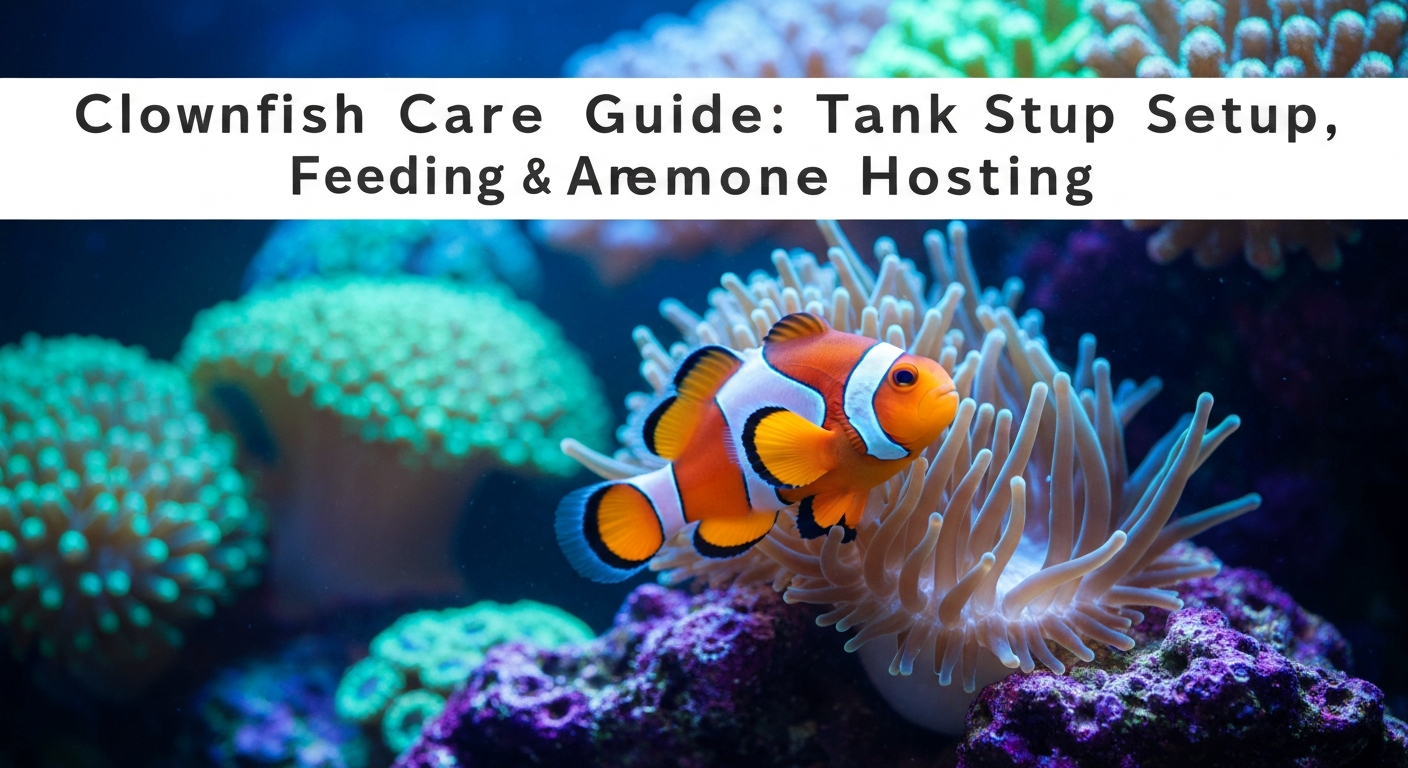
Few fish are as universally recognized as the clownfish. Their bold orange and white coloration, paired with their distinctive waddling swim, made them icons of the reef hobby long before any animated films helped. More importantly for hobbyists: clownfish are genuinely hardy, adaptable, and one of the best entry points into marine fishkeeping.
This guide covers everything you need to keep clownfish successfully — from tank setup to feeding to the anemone question everyone asks.
Clownfish Quick Facts
- Scientific name: Amphiprion ocellaris (false percula), Amphiprion percula (true percula)
- Origin: Indo-Pacific, Red Sea, Indian Ocean
- Adult size: 3–4 inches (7–10 cm)
- Lifespan: 6–10+ years in captivity
- Temperament: Semi-aggressive toward their own species; peaceful with most other fish
- Reef safe: Yes
- Difficulty: Beginner-friendly
Always Buy Captive-Bred Clownfish
This is the single most important piece of advice for buying clownfish. Tank-raised (captive-bred) clownfish are:
- Already adapted to aquarium conditions and prepared foods
- Significantly more disease-resistant than wild-caught specimens
- Not contributing to reef collection pressure
- More likely to accept a range of anemones and surrogate hosts
Look for "CB" or "tank-raised" labeling at your local fish store. Most quality marine shops stock captive-bred ocellaris exclusively. If a store can't tell you whether their clownfish are tank-raised, that's worth asking about.
Tank Size
A single clownfish can thrive in a tank as small as 20 gallons. A mated pair does well in a 30-gallon or larger setup. Do not keep clownfish in anything under 10 gallons — while they tolerate small spaces better than many marine fish, stable water chemistry in nano tanks is difficult to maintain, and the stress of poor water quality shortens their lifespan significantly.
For a reef community tank with clownfish as the centerpiece, a 40–75 gallon setup gives you room to add compatible tank mates and corals comfortably.
Water Parameters
- Temperature: 75–82°F (24–28°C)
- Salinity: 1.023–1.026 specific gravity (33–35 ppt)
- pH: 8.1–8.4
- Ammonia/Nitrite: 0 ppm
- Nitrate: Under 20 ppm (under 5 ppm for a reef with corals)
- Alkalinity: 8–11 dKH (especially important if keeping corals)
Consistency matters more than hitting exact numbers. Clownfish tolerate a range of conditions but are sensitive to sudden swings — particularly in salinity and temperature. Use a quality refractometer (not a swing-arm hydrometer) to measure salinity accurately.
Feeding
Clownfish are omnivores. In the wild they eat algae, zooplankton, and small invertebrates. In captivity they accept a wide range of prepared foods, which makes feeding straightforward:
- High-quality marine pellets — the daily staple; look for pellets sized for small fish
- Frozen mysis shrimp — excellent protein source; feed 2–3 times per week
- Frozen brine shrimp — good for variety, though lower in nutritional value than mysis
- Nori / dried seaweed — occasional algae supplementation
Feed once or twice daily, only what is consumed in 2–3 minutes. Clownfish are enthusiastic eaters and will beg at the glass — don't let that trick you into overfeeding, as excess food degrades water quality quickly in a saltwater tank.
Do Clownfish Need an Anemone?
No. This is one of the most common misconceptions in the hobby. Clownfish do not require an anemone to survive or thrive in captivity. In the wild, the clownfish-anemone relationship is mutualistic but not obligatory for the fish.
In a home aquarium, clownfish will often adopt surrogates for their hosting behavior, including:
- Torch corals (Euphyllia glabrescens) — by far the most common surrogate
- Hammer corals (Euphyllia ancora)
- Frogspawn corals (Euphyllia divisa)
- Duncan corals
- Certain large-polyp soft corals
- Powerhead intakes, filter outputs, or even a corner of the tank
If you do want to keep a real anemone, the bubble-tip anemone (Entacmaea quadricolor) is the most recommended for beginners — it's hardier than carpet or long-tentacle anemones. Be aware that anemones require intense lighting (T5 or LED with PAR 100+), excellent water quality, and a mature tank (ideally 6+ months old). They also wander, and a moving anemone can sting and kill corals in its path.
Keeping a Pair
Clownfish are protandrous hermaphrodites — all clownfish are born male, and the dominant fish in a pair transitions to female. The larger fish is always the female.
The easiest way to get a mated pair is to introduce two juveniles of similar size simultaneously into a new tank. Over several weeks to months, one will become dominant and transition to female, and they'll pair naturally. Two unrelated adults may fight — if pairing adults, introduce a significantly smaller male with the larger female.
Do not keep three clownfish together — the third will almost always be harassed to death by the dominant pair.
Compatible Tank Mates
Clownfish are generally peaceful with most non-clownfish species. Good companions include:
- Royal grammas
- Firefish gobies
- Tailspot blennies
- Bangaii cardinalfish
- Chromis damselfish (avoid aggressive damsel species)
- Cleaner shrimp (Lysmata amboinensis)
- Hermit crabs and snails
Avoid very large aggressive fish (triggers, large angels), as they may bully or eat clownfish. Also avoid keeping multiple pairs of clownfish in smaller tanks — territorial disputes between pairs are common.
Common Health Issues
- Brooklynella (clownfish disease): A parasite almost exclusive to clownfish. Symptoms include excessive slime coat, rapid breathing, and tissue erosion. Requires immediate treatment with formalin or freshwater dips. Most common in wild-caught fish — another reason to buy captive-bred.
- Ich (Cryptocaryon irritans): White spots on the body, scratching behavior. Treat with hyposalinity or copper-based medication in a quarantine tank — never add copper to a reef.
- Velvet (Amyloodinium): Gold or rust-colored dusting; highly contagious. Treat with copper in quarantine immediately.
Find Clownfish at a Local Fish Store Near You
Captive-bred clownfish are available at most quality marine fish stores. A good store will be able to tell you the source of their clownfish, whether they've been quarantined, and confirm they're eating before you buy. Use LFS Directory to find a well-reviewed saltwater and reef store near you.