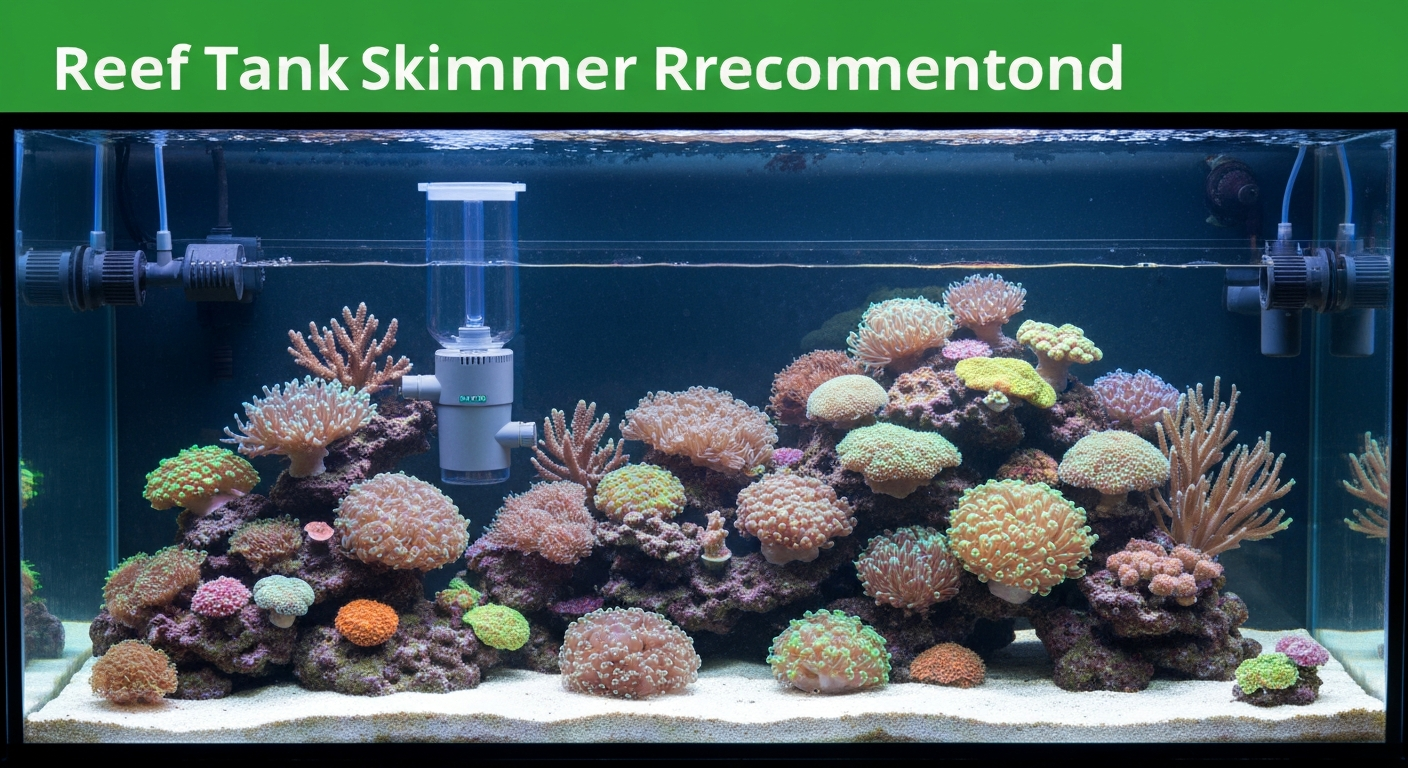
What Does a Protein Skimmer Do?
A protein skimmer removes dissolved organic compounds (DOCs) from reef tank water before they break down into ammonia and nitrate. It works by injecting fine air bubbles into a chamber of saltwater — organic molecules are attracted to the air-water interface, rise with the bubbles, and accumulate as a dark, protein-rich foam that collects in a removable cup. Regular emptying of the skimmer cup removes that waste permanently from the system. In a reef tank, this reduces nutrient load, improves water clarity, and increases dissolved oxygen — all critical for coral health.
Do You Need a Protein Skimmer?
For most reef tanks, yes. Skimmers are particularly important in tanks with heavy coral loads, fish-heavy systems, or tanks that receive regular feeding. Lightly stocked, heavily planted, or nutrient-limited systems (like ultra-low-nutrient SPS tanks managed with a refugium) can sometimes be run without one, but these are advanced setups. For beginners and intermediate reefers, a quality skimmer is one of the best investments you can make in tank stability.
Types of Protein Skimmers
Hang-on-back (HOB) skimmers mount to the back of the display tank or sump and are a common choice for smaller tanks (under 75 gallons). They're easy to install and don't require sump space, but tend to be less efficient than in-sump models.
In-sump skimmers sit inside a sump (a secondary tank in your cabinet) and are the standard choice for serious reef tanks. They're larger, more powerful, and easier to tune. Most quality skimmers over $200 are designed for in-sump use.
Recirculating skimmers use a separate recirculation pump to increase contact time between water and bubbles, improving efficiency. These are a premium option found on high-end models.
Sizing a Protein Skimmer
Skimmer ratings on the box are marketing numbers — they assume lightly stocked tanks with minimal feeding. A practical rule of thumb: buy a skimmer rated for twice your tank volume. If you have a 75-gallon system with a 20-gallon sump (95 gallons total), buy a skimmer rated for 150–200 gallons. This gives you headroom as your bioload increases and ensures the skimmer performs well under realistic conditions.
Also consider sump water level — most in-sump skimmers perform best at a specific water depth (commonly 6–8 inches). Check the manufacturer's spec before buying.
Key Features to Look For
- Needle wheel or mesh wheel pump: Produces finer bubbles than older venturi designs, improving skimming efficiency. Most modern quality skimmers use needle wheel impellers.
- Adjustable water level: Lets you tune how wet or dry the skimmate is. A good skimmer should produce dark, concentrated skimmate — not clear water.
- Easy-clean neck: The neck (the tube above the water line that foam climbs) needs regular cleaning. Wide necks and tool-free designs make maintenance faster.
- Quality pump: The pump is the heart of the skimmer. Brands like Sicce, Royal Exclusiv, and Red Sea manufacture pumps with good long-term reliability.
Recommended Brands
Bubble Magus offers strong performance at mid-range prices and is a popular first skimmer choice for tanks up to 150 gallons. Reef Octopus is a step up in quality and a strong choice for serious reef keepers — their Regal and Classic lines cover a wide range of tank sizes. Vertex and Royal Exclusiv represent the high end, with premium build quality and excellent efficiency for demanding SPS and large mixed-reef systems. Aqua C makes well-regarded HOB models for tanks without sumps.
Break-In Period and Tuning
New protein skimmers take 1–2 weeks to break in — during this period they may overflow or produce very wet skimmate as the pump and contact chamber develop a biofilm. Start with the water level set low and gradually raise it. A properly tuned skimmer produces dark brown, almost black skimmate with a peanut-butter consistency. Clear or light-colored skimmate means it's running too wet; dry or no skimmate means it needs to run wetter or the pump needs cleaning. Clean the neck weekly to prevent buildup from inhibiting foam climbing.