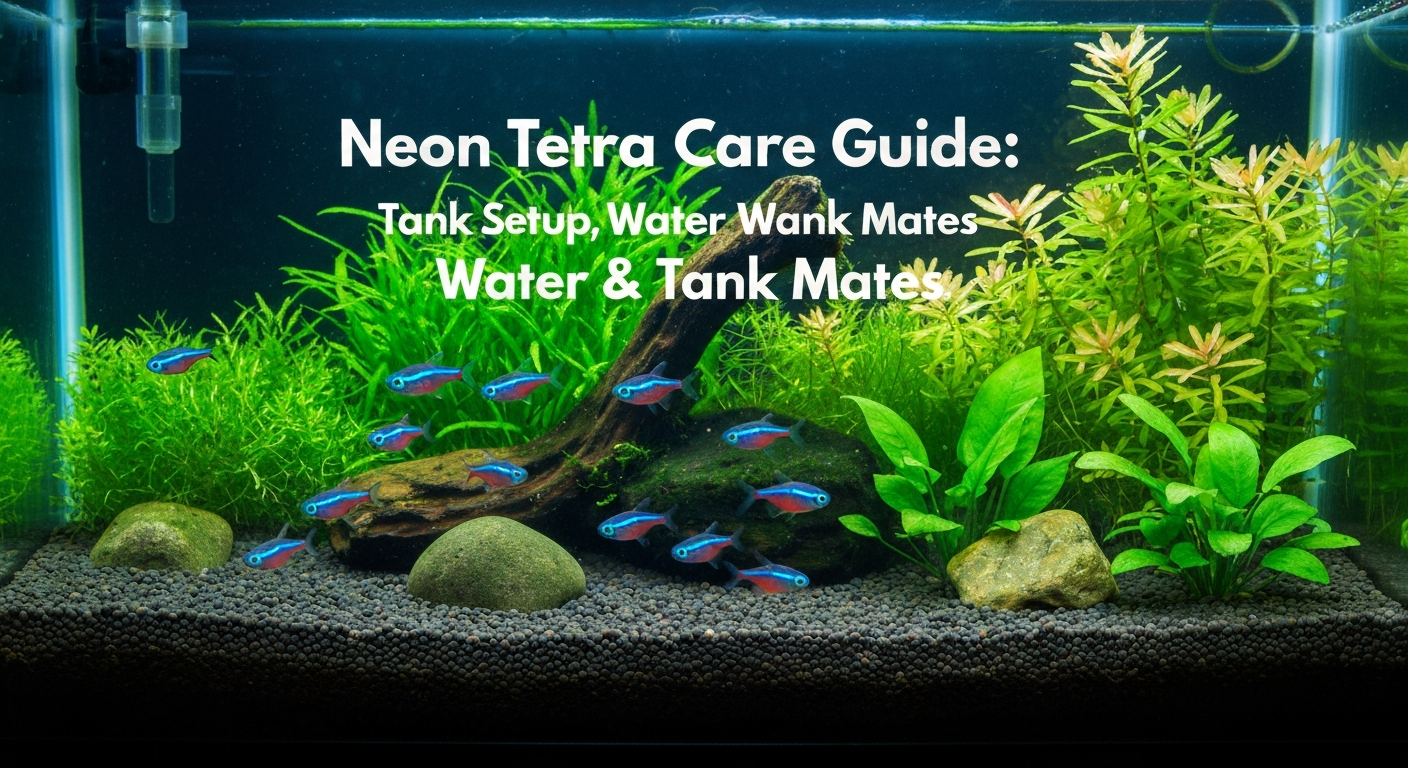
Understanding Neon Tetras
Paracheirodon innesi — the neon tetra — is native to the blackwater and clearwater streams of the western Amazon basin in South America, particularly in Peru, Colombia, and Brazil. In the wild, they inhabit slow-moving, heavily shaded waters with soft, acidic conditions, dark substrate, and dense vegetation and leaf litter. The iconic neon blue iridescent stripe running the length of their body isn't just decoration — it's a communication signal used by the school. Understanding where they come from informs every aspect of how to keep them well.
Neon tetras reach about 1.5 inches (4 cm) as adults and live 5–8 years in well-maintained aquariums. The vast majority sold in pet stores are commercially bred in farms in Southeast Asia and Eastern Europe, which means they are more adaptable to a range of water conditions than their wild-caught counterparts — but they still thrive best in soft, slightly acidic water that mimics their natural habitat.
Tank Size and Setup
Neon tetras are schooling fish and should never be kept alone or in small groups. A minimum school of 6 fish is the baseline; 10–15 is better and produces dramatically more natural behavior — coordinated movement, confident swimming throughout the tank, and the full visual effect of the school. A school of 15 neon tetras in a well-planted tank is one of the most striking displays in the freshwater hobby.
A 10-gallon tank is the minimum for a small school of 6–8; a 20-gallon long is ideal for 10–15 fish and provides more swimming room and stability. Neons are active horizontal swimmers, so longer tanks are preferable to tall ones.
Aquascape and Lighting
Neon tetras feel most secure in a planted tank with some shade and visual structure. Dense background planting, floating plants to filter light, and some driftwood or dark substrate all help replicate their blackwater origins and reduce stress. Bright, open tanks with light substrate stress neon tetras — their colors will appear washed out and they'll spend more time hiding. A dark substrate and gentle lighting brings out the full intensity of the blue and red iridescence. Indian almond leaves or alder cones can be added to tint the water slightly and lower pH naturally.
Water Parameters
Neon tetras are more tolerant than their blackwater origins suggest — commercially-bred fish adapt reasonably well to a range of conditions. That said, they thrive and live longest in soft, slightly acidic water:
- Temperature: 72–78°F (22–26°C) — a heater is required in most homes
- pH: 6.0–7.0 ideal; they can tolerate up to 7.5 but color and vitality improve in softer, more acidic conditions
- Hardness (GH): 1–10 dGH — soft water preferred; hard tap water benefits from RO blending
- Ammonia / Nitrite: 0 ppm at all times — cycle your tank fully before adding neons
- Nitrate: Under 20 ppm — regular water changes are essential
Neon tetras are sensitive to poor water quality and are often the first fish to show symptoms when parameters slip. Weekly water changes of 20–30% and a stable nitrogen cycle are more important than chasing specific pH targets.
Feeding
Neons are omnivores with small mouths — food particle size matters. Standard tropical flake food is a reasonable staple, but micro pellets designed for small fish are better, ensuring every fish in the school can eat without competition from larger fish. Supplement with frozen or live micro foods: baby brine shrimp, daphnia, cyclops, and micro worms are all excellent and enhance coloration noticeably. Feed small amounts once or twice daily — what they can consume in two minutes — and remove any uneaten food to protect water quality.
Tank Mates
Neon tetras are peaceful and best kept with fish of similar size and temperament. Good tank mate options:
- Other small tetras (ember tetras, rummy nose tetras, black skirt tetras)
- Small rasboras (harlequin, lambchop, chili rasbora)
- Corydoras catfish (peaceful bottom dwellers)
- Dwarf gouramis or honey gouramis (peaceful labyrinth fish)
- Otocinclus catfish (algae eaters that ignore neons)
- Freshwater shrimp (amano, cherry — though very small shrimp may occasionally be eaten)
Avoid keeping neons with large fish, aggressive fish, or known fin-nippers. Angelfish and neons are a classic pairing that works poorly in practice — adult angelfish will eat neon tetras, as the tetras fall within their prey size range.
Neon Tetra Disease
Neon tetra disease (NTD) is a parasitic infection caused by Pleistophora hyphessobryconis — a microsporidian parasite for which there is no effective treatment. Symptoms include loss of the iridescent blue stripe (it appears white or faded in patches), curved spine, difficulty swimming, and wasting. Affected fish should be removed immediately as the disease spreads through the school, typically via cannibalism of dead or dying fish. There is no cure — prevention through quarantine of new fish and purchasing from reputable sources is the only defense. Because NTD is incurable, buying neon tetras from stores with clearly healthy, vibrant schools is critical.