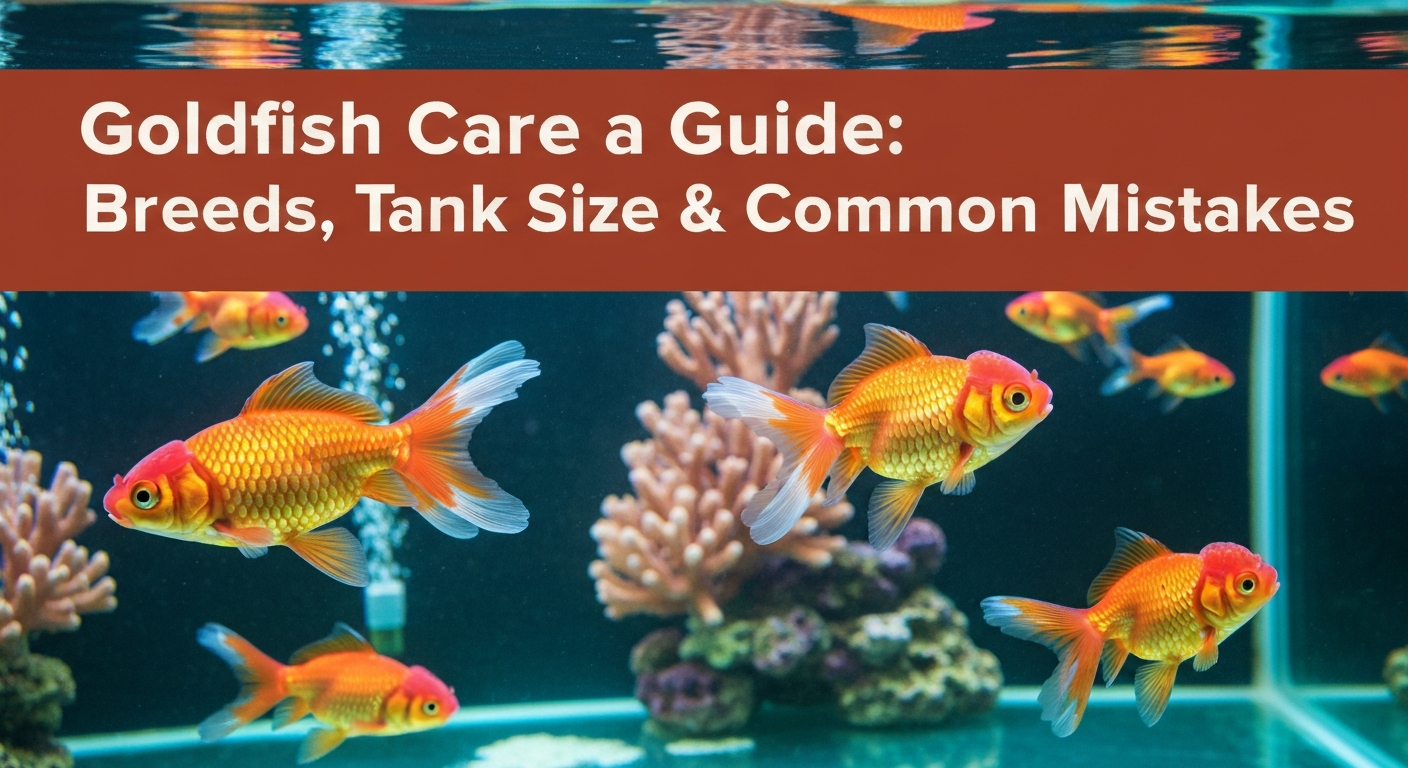
Understanding Goldfish
Goldfish (Carassius auratus) are domesticated descendants of wild carp native to East Asia, selectively bred for over a thousand years. They are cold-water fish — unlike tropical fish, they do not require a heater in most homes — but they are heavy waste producers and require significantly more filtration and space than their reputation suggests. A healthy, well-kept goldfish can live 10–15 years, and common goldfish can exceed 20 years in ponds.
Common vs. Fancy Goldfish
The two broad categories of goldfish have different care requirements:
Common/Single-tail goldfish (common, comet, shubunkin) are hardy, fast-growing, and can reach 10–12 inches. They are best suited for ponds or very large aquariums. They outgrow most home tanks quickly and are not suitable for bowls or small aquariums.
Fancy/Double-tail goldfish (oranda, ryukin, ranchu, telescope eye, butterfly tail) are slower swimmers with rounder bodies and more elaborate fins. They stay smaller (6–8 inches typically) and are better suited to aquarium keeping, but they are more sensitive to water quality and more prone to swim bladder issues due to their compressed body shape.
Tank Size
This is where most new goldfish owners go wrong. The commonly repeated "1 inch per gallon" rule does not apply to goldfish. Realistic minimums:
- Single fancy goldfish: 20 gallons minimum, 30+ gallons recommended
- Each additional fancy goldfish: Add 10 gallons
- Single common/comet: 40+ gallons, or a pond
- Bowls and small tanks: Not suitable for any goldfish, regardless of size
Goldfish produce significantly more ammonia than most fish of equivalent size. Undersized tanks result in chronic stress, stunted growth, and shortened lifespans.
Water Parameters
Goldfish are cold-water fish and do not need a heater in most homes — in fact, temperatures above 75°F stress them over time. Ideal parameters:
- Temperature: 65–72°F (18–22°C) — room temperature is usually fine
- pH: 7.0–8.0 — they prefer neutral to slightly alkaline water
- Ammonia / Nitrite: 0 ppm — goldfish are ammonia machines; filtration must be robust
- Nitrate: Under 20 ppm — requires consistent water changes
Over-filter goldfish tanks. A filter rated for twice the tank volume is a reasonable starting point. Weekly water changes of 30–50% are standard for goldfish tanks.
Feeding
Goldfish are omnivores and should be fed a varied diet. Use a goldfish-specific sinking or gel food rather than floating pellets — floating food causes goldfish to gulp air, contributing to swim bladder problems. Feed small amounts 2–3 times daily, only what they can consume in 2 minutes. Good supplemental foods include blanched vegetables (peas, zucchini, spinach), bloodworms, and daphnia. Avoid overfeeding — goldfish will eat constantly if allowed to, which stresses their digestive system and degrades water quality rapidly.
Common Mistakes
Too-small tanks are the most common mistake — a goldfish in a 5-gallon bowl will suffer and die young, not thrive. Inadequate filtration is the second — goldfish need heavy filtration, not light. Mixing fancy and common goldfish is problematic because the faster common goldfish outcompete fancies for food. Overfeeding causes water quality crashes and swim bladder issues. Finally, skipping quarantine for new goldfish is risky — goldfish can carry ich and bacterial infections that devastate an established tank.
Choosing a Healthy Goldfish at the Store
When shopping for goldfish, look for fish that are actively swimming, not sitting on the bottom or gasping at the surface. Fins should be intact and erect, not clamped or ragged. The belly should be rounded but not bloated. Check the tank — if other fish in the tank look sick or there are dead fish, skip that tank entirely. A reputable local fish store will quarantine new arrivals and be happy to answer questions about the fish's origin and how long they've had it.