Understanding Betta Fish
Betta splendens — the Siamese fighting fish — is native to the shallow, warm waters of Southeast Asia, including rice paddies, ponds, and slow-moving streams in Thailand, Cambodia, and Vietnam. They are labyrinth fish, meaning they can breathe atmospheric oxygen directly through a specialized organ, which is why they can survive in low-oxygen environments. This adaptation is often misused to justify keeping them in tiny containers — a practice that shortens their lives significantly.
Tank Size and Setup
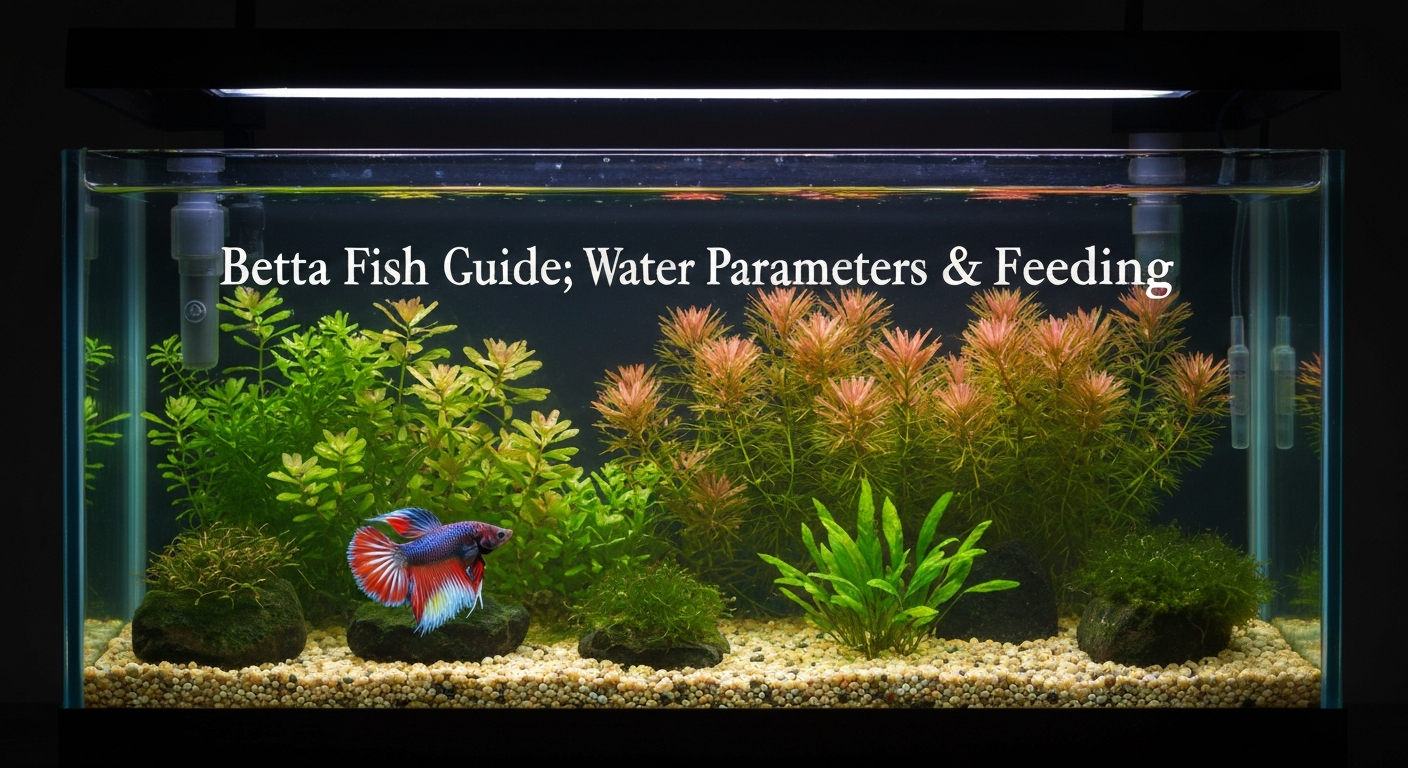
The minimum recommended tank size for a single betta is 5 gallons, with 10 gallons being significantly better. Smaller containers — cups, vases, bowls — do not provide stable water parameters and stress the fish. Bettas benefit from a lid, as they are jumpers, and from a gentle filter that does not create strong current (sponge filters work well). Provide hiding spots using plants, caves, or driftwood — bettas are territorial and feel more secure with visual breaks in their environment.
Substrate and Decor
Fine-grain substrate or smooth gravel works well. Avoid sharp decorations that can shred betta fins — if you can run pantyhose across a decoration and it snags, it will damage fins. Live plants are highly recommended: Java fern, anubias, and floating plants like frogbit all thrive in betta tanks and improve water quality naturally.
Water Parameters
Bettas are tropical fish and require warm water consistently. Key parameters:
- Temperature: 76–82°F (24–28°C) — a heater is required in most homes
- pH: 6.5–7.5 — tolerant of a range but stable pH matters more than exact value
- Ammonia / Nitrite: 0 ppm at all times — cycle your tank before adding fish
- Nitrate: Under 20 ppm — managed through water changes
- Hardness: Soft to moderately hard — 50–150 ppm GH is fine
Perform 25–30% water changes weekly in established tanks. Always dechlorinate tap water before adding it to the tank.
Feeding
Bettas are carnivores and require a high-protein diet. A quality betta-specific pellet (not generic tropical flake) should be the staple — look for pellets with fish meal or shrimp meal as the first ingredient, not wheat or corn. Feed 2–4 pellets once or twice daily, removing uneaten food after 2 minutes. Supplement with frozen or live foods: bloodworms, daphnia, and brine shrimp are all excellent treats. Fast your betta one day per week to reduce bloat and constipation risk.
Tank Mates
Male bettas cannot be kept together — they will fight to the death. A single male can be kept with peaceful, fast-moving community fish that don't have flowing fins (which bettas may attack). Good tank mate options include:
- Corydoras catfish (bottom dwelling, ignored by bettas)
- Small rasboras or tetras that are not fin-nippers
- Nerite snails and mystery snails
- Amano or ghost shrimp (smaller shrimp may be eaten)
Avoid guppies (fancy fins trigger aggression), tiger barbs (fin-nippers), and any aggressive or territorial fish.
Common Health Issues
Fin rot is the most common betta ailment and is caused by poor water quality — the fix is clean water, not medication in most cases. Ich (white spots) is treated with raised temperature and aquarium salt or medication. Bloat and constipation are common in overfed fish — fasting and feeding daphnia usually resolves mild cases. Any betta that sits clamped at the surface, has clamped fins, or refuses food for more than 3 days warrants a water test first, then closer investigation.