Miami's Aquarium Scene
Miami occupies a unique position in the American aquarium hobby. It is the closest major US city to the Caribbean reef system, sits within Florida's expansive aquaculture corridor, and hosts a port through which significant volumes of tropical livestock move into the US market. The result is a reef and saltwater scene with access to livestock that other cities simply can't match — and a freshwater scene that benefits from Florida's warm climate and the state's enormous tropical fish farming industry centered in Homestead and the Redlands just south of the city.
The aquarium store landscape in Miami spans the metro area and Broward County to the north. South Florida's sprawl means driving is required to reach the best shops, but the density of good stores makes a day trip around the region genuinely rewarding. The local hobbyist community is active, with strong reef club representation through South Florida saltwater groups and regular frag swaps.
Why Miami Thrives in Fish Store Culture
Geography is the primary factor. Miami's location at the southern tip of Florida puts it within reach of Caribbean coral supply chains, gives it port access for livestock imports, and surrounds it with the largest concentration of tropical fish farms in the United States. The Homestead-Florida City area south of Miami is home to dozens of fish farms that supply retailers nationwide — local Miami stores have a meaningful freshness and cost advantage on Florida-raised livestock compared to stores in other parts of the country.
The year-round warm climate also enables outdoor fish keeping in ways impossible in northern states. Koi ponds, outdoor tropical ponds, and water garden features are viable year-round in Miami, supporting a healthy pond and water garden trade alongside the indoor aquarium market. The large Cuban, Caribbean, and Latin American communities in Miami also contribute demand for specific livestock — particularly ornamental cichlids, colorful freshwater tropicals, and reef fish that reflect Caribbean origins.
What to Look For
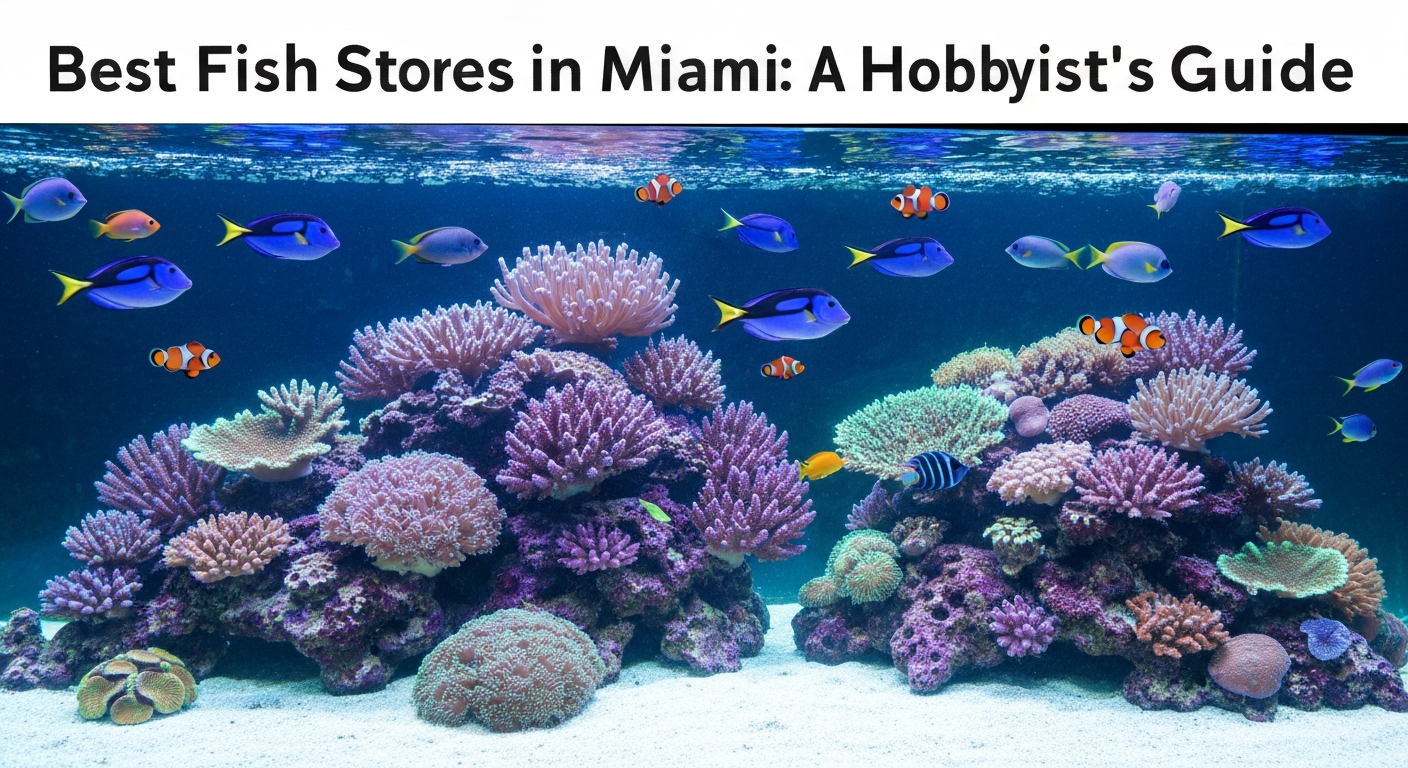
Miami's best stores excel in coral and reef livestock selection — shops that would be considered premium anywhere else in the country are the standard here. When visiting reef stores, look for corals with clear identification (species name, not just color morph nickname), established frag systems, and staff who can speak to the coral's care requirements and origin. The best Miami reef stores maintain propagation systems of their own and sell locally-fragged corals alongside imports.
For freshwater, ask whether the store sources from Florida farms — livestock that hasn't traveled across the country is generally healthier and better acclimated to Florida water conditions. Many Miami stores also carry species that are difficult to find elsewhere, particularly Caribbean and Central American cichlids and wild-caught South American species that enter the country through Florida ports.
Store Types Available
Reef and Coral Specialists are a defining feature of the Miami market, with stores carrying extensive live coral selections, premium marine fish, and the full range of reef equipment. Some stores in South Florida specialize in high-end SPS corals and serve a national online customer base in addition to walk-in trade. General Saltwater Stores cover the full range of marine livestock and supplies and are widely distributed across the metro. Freshwater Specialists benefit from Florida farm proximity and often carry species that are rare elsewhere — wild-caught South Americans, cichlid specialists, and planted tank stores with access to Florida-grown aquatic plants. Pond and Water Garden Dealers are more prevalent in Miami than in most US cities, driven by the year-round outdoor viability.
Tips for Visiting Miami Fish Stores
South Florida traffic is significant. Plan visits outside of rush hours — late morning on weekdays or early Saturday mornings are generally the best combination of available parking, staffed stores, and manageable driving. Many of the best reef stores are in industrial or commercial areas in cities like Doral, Hialeah, and Kendall rather than in Miami proper — research addresses in advance. The summer months (June–September) bring intense heat and humidity; if you're transporting live fish, have a cooler and ice packs for the car and limit transport time.
For corals specifically, check store social media before visiting — many Miami reef shops update Instagram or Facebook with new arrivals weekly or even daily. The frag swap scene in South Florida is active and worth tracking; regional reef clubs host events where you can access locally-propagated corals at better prices than retail.
Water Quality in Miami
Miami's municipal water is drawn from the Biscayne Aquifer, a limestone aquifer that produces water with unique characteristics: naturally soft to moderately hard (GH typically 4–8 dGH), pH ranging from 7.2–7.8, and TDS in the 150–300 ppm range depending on location and season. The limestone geology adds some calcium and magnesium naturally, which can be beneficial for certain fish but can also mean elevated hardness compared to surface-water cities.
Reef keepers in Miami universally use RO/DI systems — the tap water parameters are workable but inconsistent enough that building your reef on RO/DI water gives you full control over salinity and alkalinity. Freshwater hobbyists keeping tetras, discus, or blackwater species will also want to cut tap water with RO to reduce hardness and lower pH. Many local fish stores offer RO water refill stations for customers. During summer hurricane season, municipal water can temporarily change character after storm events — test before large water changes if there's been significant rainfall.